When the Barking Won't Stop: Compassionate, Science-Based Help for Stressed-Out Dogs and Their People
It All Begins Here
By: Cindy Caldwell
If you're living with a dog who barks excessively, you're not alone, and you're not failing.
At Smart Paws Academy, we meet thoughtful, devoted dog owners who arrive exhausted, embarrassed, and discouraged. They love their dogs deeply. They've read the articles, watched the videos, tried the advice from friends and neighbors.
And yet the barking continues.
It's not just the noise. It's the toll.
The way you hesitate to invite people over because you're bracing for chaos at the door. The tension with neighbors who are clearly frustrated. The quiet disappointment of realizing you can't take your dog to coffee shops, walks through town, or family gatherings because you're afraid of the disruption or the judgment.
And perhaps most painfully, it's the feeling that life with your dog doesn't look the way you hoped it would.
If that resonates, this is for you.
Your Dog Isn't Being Bad, They're Communicating
Here's one of the most important things we help owners understand: barking is not bad behavior. It's communication.
Dogs bark because something in their world feels important, like fear, frustration, excitement, alarm, overarousal. When barking becomes excessive, it doesn't mean your dog is stubborn or trying to control you. It means your dog doesn't yet have the skills or emotional regulation to respond differently.
That distinction changes everything about how we help.
Why This Feels So Heavy (And Why That's Completely Valid)
Barking is uniquely stressful. It's loud, repetitive, and impossible to ignore. Over time, it wears down even the most patient person.
Our clients tell us:
"I'm constantly on edge in my own home."
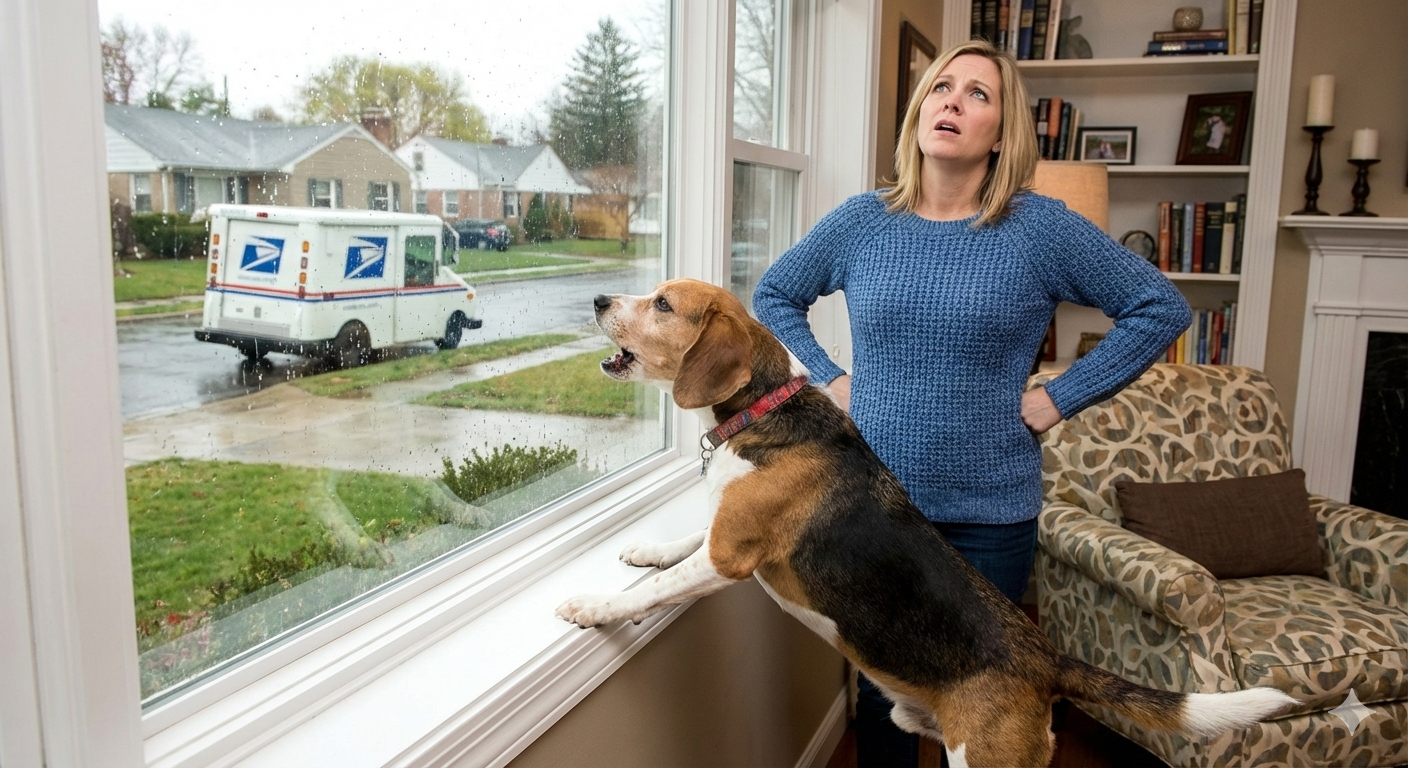
"I dread delivery trucks, doorbells, neighbors walking by."
"I feel guilty for being frustrated with my dog, but I am."
The problem spreads. Partners disagree on how to handle it. Neighbors complain. Guests feel unwelcome. Slowly, life shrinks around the barking.
And when well-meaning advice turns into criticism: ("You need to be firmer," "Just use a bark collar," "My dog would never do that") it becomes isolating and shaming.
You deserve support, not judgment. That's what we're here for.
Why Quick Fixes Often Backfire
When barking feels overwhelming, quick fixes look appealing. Devices that suppress barking promise instant quiet when you're desperate for peace.
But decades of behavioral science show us what really happens:
Suppressing a behavior doesn't resolve the underlying emotion. Punishment increases stress, anxiety, and distrust. Dogs may stop barking, but they often become more fearful, reactive, or shut down. The bond between you and your dog suffers.
We take a different approach.
Our training is science-based, humane, and non-aversive, rooted in how dogs learn and cope. We don't aim to silence your dog. We aim to help your dog feel safe, capable, and regulated enough to choose quieter responses on their own.
That's how lasting change happens.
Starting With the "Why"
Before we work on reducing barking, we look at what's driving it:
Environment: What triggers the barking? What sights, sounds, or patterns are involved?
Learning history: Has barking consistently made things go away or brought attention?
Emotional state: Is your dog anxious, overstimulated, frustrated, or fearful?
Biology and temperament: Some dogs are more sensitive, vocal, or reactive by nature.
Barking is rarely about disobedience. More often, it's about a nervous system working overtime.
When we address the root causes, the barking starts to change naturally.
Management: The Bridge to Better Behavior
One of the most misunderstood parts of training is management—and it's one of the most powerful.
Management doesn't mean you're avoiding the problem. It means you're creating a bridge, a calmer environment that prevents your dog from rehearsing unwanted behaviors while new skills are being learned.
This might include visual barriers to reduce triggers, strategic white noise, door routines that prevent chaos, or adjusted schedules during high-trigger times.
Why does this matter? Because every time your dog practices barking, that neural pathway gets stronger. Management reduces rehearsal while we build alternatives. Think of it as stabilizing the situation so learning can actually occur.
Teaching What to Do Instead
We don't just ask dogs to "stop." We teach them what to do instead.
Depending on your dog, this may include teaching calm observation rather than explosive reaction, building a reliable relaxation station, reinforcing quiet check-ins and disengagement, or gradually increasing exposure to triggers at tolerable levels.
This work happens incrementally, at a pace your dog can handle. Progress may look subtle at first—shorter barking episodes, quicker recovery, softer intensity. These are signs of real learning.
And they matter.
What Happens When Things Start to Shift
As barking improves, something else often happens: owners begin to relax.
They trust their dog more. They feel less tense in their own home. They stop bracing for the next outburst. Slowly, the relationship begins to heal, not just between dog and world, but between dog and human.
Training becomes less about control and more about communication and cooperation.
That's when people tell us, "I finally feel hopeful again," or "I'm enjoying my dog instead of managing a problem all day."
That's the outcome we care about most.
You're Not Asking for Too Much
Wanting peace in your home is not unreasonable. Wanting to enjoy your dog without constant stress is not selfish. Wanting methods that are kind, effective, and grounded in science is not naïve.
Here's what we believe:
Barking is information, not defiance. Dogs deserve humane, thoughtful training. Owners deserve relief, clarity, and support. Change is possible, even when it's been hard for a long time.
If barking has been stealing your joy, your confidence, or your vision of life with your dog, help is available.
You don't need harsher tools. You don't need to "dominate" your dog. You don't need to give up.
You need a plan that honors both ends of the leash and builds a calmer future, one thoughtful step at a time.
If you're ready to explore that path, we'd be honored to walk it with you.