The doorbell rings. A little water goes in.
Someone knocks loudly. More water.
Children shout outside. More water.
A stranger in a scary costume appears at the door. Even more water.
Eventually, the bucket may become so full that it overflows.
When that happens, your dog may bark uncontrollably, lunge, hide, pace, or struggle to respond to cues they normally know very well.
They haven't suddenly forgotten their training. Their emotional arousal has become so high that thinking clearly and responding calmly becomes much harder.
Smart Paws Academy is happy to provide early access to blogs for previous, current, and new clients. Our blogs offer tips and helpful strategies to keep in mind when working with your dog at home. Thank you for taking the time to understand the dog in front of you.
Smart Paws Academy | Gettysburg, Hanover, Littlestown, PA
Halloween Dog Safety: How to Keep Your Dog Calm and Comfortable
Halloween Is Fun for Us. But What About Our Dogs?
Ding-dong! Bark! Bark! Bark!
The doorbell rings. Your dog races to the front door and barks furiously. You open it, and a small creature stands there with an enormous head, a strange face, and a flowing black cape.
Your dog has no idea it's your neighbor's child in a Halloween costume.
You hand out some candy, close the door, and try to settle your dog. Five minutes later, the doorbell rings again. More barking. More strangers. More excitement. And this goes on for hours.
For us, Halloween is a wonderful evening of costumes, candy, decorations, and excited children. But for our dogs, it can be an exhausting parade of unfamiliar sights, startling sounds, and unpredictable visitors. And then there's that adorable pumpkin costume we want them to wear!
Halloween can be extremely stressful for dogs. Between constant doorbell ringing, unfamiliar people in costumes, loud noises, and tempting Halloween candy, your dog may face several safety concerns. With a little preparation, you can help your dog feel safe and comfortable while your family enjoys the festivities.
Here's Something Worth Remembering: Your Dog Doesn't Know It's Halloween.
They don't understand that those strange-looking visitors are children in costumes. They don't know why their familiar evening routine has suddenly turned into chaos. What we consider fun and festive may confuse, overwhelm, or genuinely frighten our dogs.
So before you put on your costume and fill the candy bowl, let's think about how we can make Halloween a little less scary for the four-legged members of our families.
Behavior is information. Our job is to pay attention to what our dogs are telling us.
Halloween Dog Costume Safety
We love seeing dogs dressed as pumpkins, superheroes, bumblebees, and hot dogs. They're cute, and the pictures can be irresistible. But dogs don't understand why we want them to wear costumes. Some dogs tolerate clothing quite well, while others are uncomfortable with anything that changes how their bodies feel or move. Hats, hoods, and headpieces can be especially bothersome.
If you want a Halloween picture of your dog, keep it simple. Choose something lightweight that doesn't restrict movement, breathing, hearing, or vision. Let your dog get used to it gradually, and watch their body language. If your dog freezes, turns away, paws at the costume, lowers their head, or tries to escape, they're telling you they're uncomfortable. Take a quick picture only if your dog is relaxed and willing, then remove the costume.
And if your dog doesn't want to wear one? Skip it! Your dog doesn't need a costume to be adorable.
Keep Your Dog Away From Trick-or-Treaters
One of the kindest things you can do for your dog on Halloween is to let them enjoy the evening somewhere away from the excitement. They don't need to greet trick-or-treaters. They don't need to supervise the candy distribution. And they certainly don't need to accompany you to the door every time someone knocks.
Before the festivities begin, prepare a comfortable, quiet space away from the front entrance. Choose a room where your dog already feels safe. Provide a favorite bed, familiar toys, and something enjoyable to occupy their attention. A stuffed Kong, lick mat, or favorite chew can be a great option. Soft music or white noise may help mask outside sounds.
If your dog enjoys resting in a crate, that may also work, as long as they are already comfortable there. Don't forget to give your dog a potty break before visitors arrive!
Keep the door to your dog's resting area closed or use appropriate barriers to prevent accidental escapes. Make sure everyone in the household understands that the dog is enjoying some private time and should not be disturbed.
This isn't excluding your dog from the celebration. It's recognizing that your dog's most enjoyable Halloween experience may be one where they don't have to participate at all.
Understanding Your Dog's Halloween Stress Bucket
I often use the stress-bucket illustration to help clients understand their dogs' behavior. Imagine that your dog has an invisible bucket. Every stressful or highly exciting experience adds a little more.
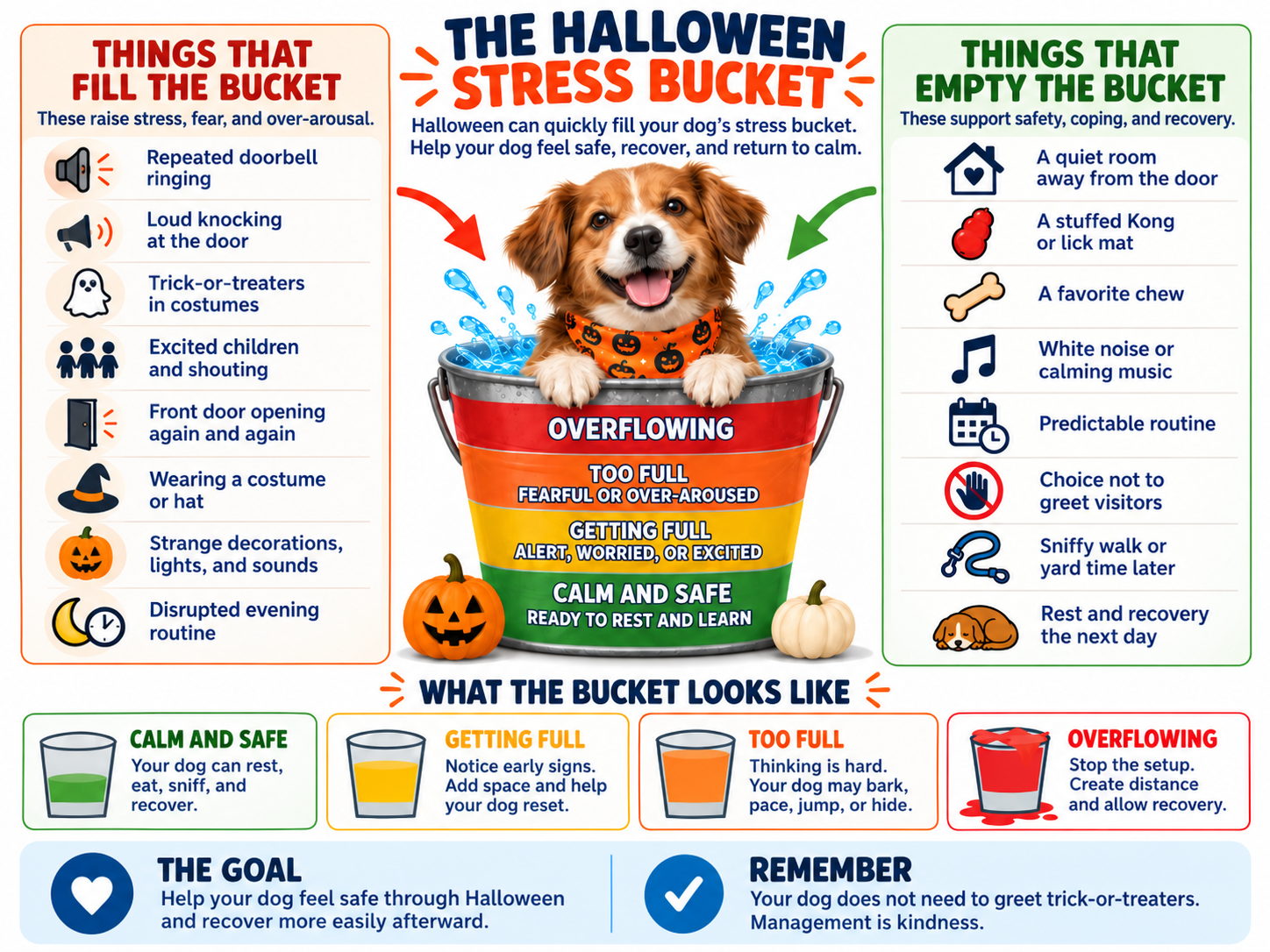
The goal is to recognize when the bucket is beginning to fill and take steps to prevent it from overflowing.
That's why management matters so much.
Giving your dog a quiet place to rest, reducing exposure to frightening situations, providing enjoyable enrichment, and maintaining familiar routines all help reduce the demands on your dog.
Take a look at our Halloween Stress Bucket illustration to see what fills your dog's bucket and what helps empty it.
Can You Prepare Your Dog for Halloween?
Yes! And you don't have to wait until Halloween night. If your dog becomes excited or upset when the doorbell rings, you can practice helping them develop a calmer response.
Start with a very quiet recording of a doorbell or knocking sound. Play it once, then offer a tasty treat. If your dog remains comfortable, repeat the exercise a few times. Gradually increase the volume over several sessions, always watching for signs of stress. You might also practice having your dog go to their mat or resting place when they hear the doorbell.
But here's something important: Repeatedly ringing the doorbell until your dog stops reacting isn't necessarily helping them overcome their fear. It may actually increase their distress. We want to create positive associations with sounds that previously caused alarm, not overwhelm our dogs until they give up responding.
And remember, even if your dog has made wonderful progress with doorbell training, Halloween may still be too much. There's nothing wrong with choosing a quiet evening away from the festivities.
Halloween Candy That Is Dangerous to Dogs
Halloween candy presents another potential danger.
Chocolate is toxic to dogs, particularly dark chocolate and baking chocolate. Some sugar-free candies and gums contain xylitol, which can cause a life-threatening emergency. Candy wrappers can also create choking or intestinal blockage hazards.
Keep candy in a secure location where curious noses and paws cannot reach it. Make sure children know not to share their treats with the dog. If you suspect your dog has eaten chocolate, xylitol, or another potentially dangerous treat, contact your veterinarian or an animal poison control service immediately rather than waiting for symptoms.
Keep Halloween Decorations Out of Reach
One thing most dog owners forget is the decorations. If you like lighting candles, hanging streamers, or cracking glow sticks, remember these can be extremely harmful to dogs if they ingest them.
If your dog is known for grabbing things they shouldn’t, keep small, toxic decorations out of reach. During a stressful situation, they might act out of the norm and grab things they shouldn’t to calm themselves. So keep decorations in sight and up high where your dog can’t access them.
If you think your dog may have eaten any small or toxic decorations, call your vet or animal poison control right away. Don’t wait.
The Day After Halloween: Help Empty the Bucket
Many dog owners don't realize that the emotional effects of a stressful experience may continue even after the event ends.
Stress triggers physiological changes, including the release of hormones such as cortisol. Recovery timing varies widely depending on the dog, the experience's intensity, and other factors. Some dogs need as much as 48 hours to recover after stressful experiences.
The following day, your dog might be more sensitive to noises, more reactive on walks, or less tolerant of everyday frustrations. So give them opportunities to decompress. Take a leisurely sniffing walk somewhere familiar and quiet. Let them explore the yard. Offer a favorite chew or gentle enrichment activity. Maintain their normal routines and allow plenty of uninterrupted rest.
You don't need to fill their day with additional training or activities. Sometimes the best thing we can do is let our dogs relax and recover.
This Halloween, Choose Kindness Over Cuteness
Halloween can still be a wonderful celebration for your family. You can decorate your home, enjoy the costumes, hand out candy, and make memories with the neighborhood children. Just remember that your dog experiences the evening differently. They don't need to wear a pumpkin costume. They don't need to greet a parade of strangers in costumes. And they don't need to prove they can handle all the excitement. They need to know that the people they trust will recognize when they're uncomfortable and help them feel safe.
This Halloween, give your dog a quiet evening, a favorite chew, and the freedom to sit out the festivities. And when the excitement is over, help them empty that stress bucket and return to calm.
After all, building a trusting relationship with our dogs means understanding their needs, even when they differ from our own.
Quick Halloween Safety Tips for Dogs to Remember
When Halloween finally arrives, don't forget these important tips to keep your dog comfortable, calm, and safe.
Give your dog a quiet space away from the front door.
Take your dog outside before trick-or-treaters arrive.
Keep chocolate and other toxic candy out of reach.
Don't force your dog to wear a costume.
Use white noise or soft music to reduce outside sounds.
Watch for signs of stress or fear.
Don't force your dog to interact with visitors.
Give your dog time to decompress after Halloween.
Is Your Dog Struggling With Fear, Barking, or Overexcitement?
At Smart Paws Academy, we believe that understanding behavior is the first step toward changing it. Through private, in-home, relationship-based training, we help dogs and their people develop the confidence, skills, and trust they need to navigate everyday challenges.
Serving Gettysburg, Hanover, Littlestown, and surrounding communities.
Contact us to schedule a free phone consultation.
Halloween Dog Safety FAQs

-
Halloween brings an unusual combination of sounds, sights, and activity. Repeated doorbell ringing, strangers approaching the house, and unfamiliar costumes can trigger excitement, fear, frustration, or protective barking. Your dog isn't necessarily misbehaving. They're responding to something happening in their environment. Providing a quiet space away from the front door can help prevent them from becoming overwhelmed.
-
For most dogs, it's better to skip the greetings. Children in costumes may look, sound, and move differently from familiar people. Even friendly dogs can become overwhelmed by repeated visitors. Give your dog a comfortable place to rest away from the door. Your dog doesn't need to participate in Halloween to have a good evening.
-
Not necessarily, but your dog's comfort should determine whether a costume is appropriate. Some dogs willingly wear lightweight clothing, while others find costumes stressful or restrictive. Avoid anything that interferes with movement, breathing, hearing, or vision. Watch for signs of discomfort such as freezing, lip licking, turning away, or trying to remove the costume. If your dog isn't comfortable, skip the costume.
-
Signs may include panting when not hot, pacing, trembling, hiding, lip licking, yawning, pinned-back ears, a lowered body posture, or difficulty settling. Some dogs become unusually quiet or freeze, while others bark or become highly active. Look at your dog's whole body and the situation, rather than relying on a single signal. Recognizing it early lets you help before stress escalates.
-
The stress bucket is a simple way to understand how excitement, frustration, and fear can accumulate. Imagine each stressful experience adding water to a bucket. When too many challenges occur without adequate recovery, the bucket may overflow. At that point, your dog may struggle to respond calmly, even to familiar cues. Reducing stressful experiences and providing rest and decompression opportunities can help keep the bucket from overflowing.
-
Prevention is often more effective than calming a dog who's already overwhelmed. Before visitors arrive, create a quiet resting space away from the entrance. Offer comfortable bedding, a favorite chew, stuffed Kong, or lick mat. White noise may help mask outside sounds. If your dog seeks comfort from you, it's perfectly fine to reassure them. Comforting a frightened dog does not reinforce fear.
-
Yes. Some dogs need additional time to recover after an unusually stressful or exciting experience. They may seem more sensitive to noises, reactive to everyday triggers, or less able to settle. Stress-related physiological responses, including changes in cortisol, vary between dogs. Give your dog opportunities to rest, maintain familiar routines, offer gentle enrichment, and include relaxed sniffing activities rather than adding new challenges right away.
-
Sniffing provides valuable mental enrichment and allows dogs to explore their environment at their own pace. A relaxed sniffing walk or quiet yard exploration can help your dog decompress after a busy evening. Choose a familiar, low-distraction location and allow your dog to investigate without rushing. The goal isn't exercise intensity or distance. It's giving your dog an enjoyable, low-pressure experience.
-
Chocolate is toxic to dogs, particularly dark chocolate and baking chocolate. Candy or gum containing xylitol, sometimes listed as birch sugar, can cause a life-threatening emergency. Raisins and certain other ingredients can also be dangerous. Candy wrappers may cause choking or intestinal blockages. Keep treats securely out of reach. If your dog eats potentially toxic candy, contact your veterinarian or an animal poison control service immediately.
-
Reduce their exposure to whatever is causing distress. Move them to a quiet, familiar area, offer comfort if they seek it, and give them time to settle. Don't punish barking, force interactions, or insist they face whatever frightened them. If your dog is too distressed to eat or engage with a favorite activity, focus on safety and reducing stimulation rather than continuing training.
-
Yes. Positive reinforcement and carefully planned behavior modification can help many dogs become more comfortable around visitors, doorbells, and unfamiliar situations. Training should progress at a pace where the dog feels safe enough to learn. For dogs with significant fear or reactivity, a qualified force-free trainer can help develop an individualized plan, often in collaboration with a veterinarian when appropriate.