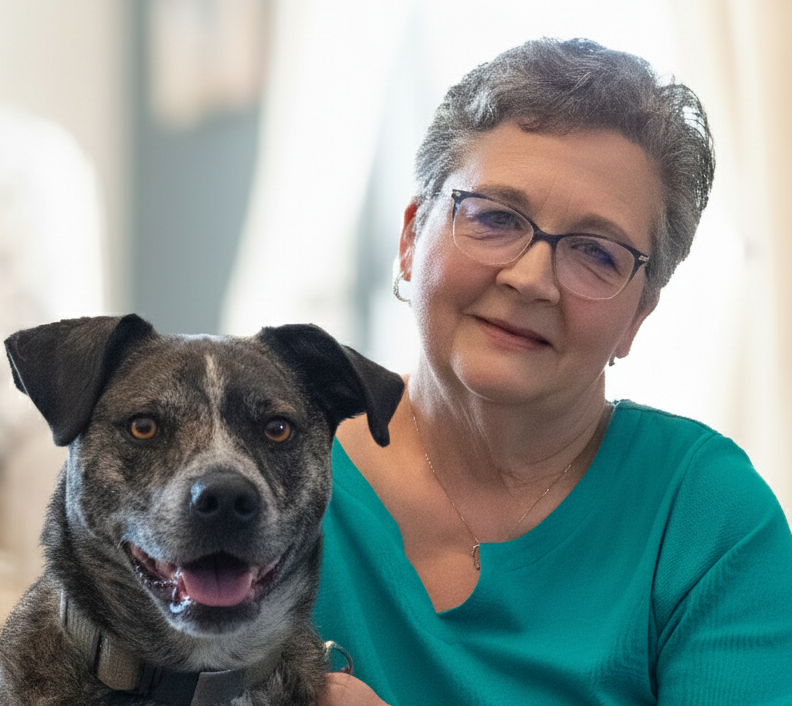
School Is Back—and Your Dog Knows It
Understanding Changes in Your Dog's Behavior (Back-to-School Separation Anxiety in Dogs: Signs and What to Do)
The backpacks have disappeared out the door. The house has grown quieter. Summer's more casual rhythm has been replaced by alarms, bus schedules, homework, sports practices, and earlier bedtimes.
The people in your family may understand why everything changed so quickly. Your dog does not.
Perhaps your dog has begun following you from room to room. Maybe you've noticed more barking, chewing, restlessness, or mischief. You might come home to a potty accident or hear from a neighbor that your dog barked while you were gone. When the kids come home, your dog may greet them with frantic jumping, mouthing, whining, or racing around the house.
It's easy to interpret these behaviors as stubbornness or disobedience, but your dog is not trying to give you a hard time. Your dog may be having a hard time.
Dogs Notice Changes in the Family Rhythm
Dogs are remarkably good at learning our patterns. They recognize the sound of an alarm, the clothes we wear to work, the appearance of a backpack, and the moment we reach for our keys.
During summer, children may be home more often. That means extra play, outdoor activity, neighborhood playmates, and companionship throughout the day. When school begins, all of that can change, literally, overnight.
Some dogs adapt without much difficulty. Others struggle with the sudden loss of activity and company. Rescue dogs, newly adopted dogs, puppies, and dogs already prone to anxiety may be especially sensitive to the change.
Their behavior is communication. So before deciding how to “fix it,” ask what it may be telling us.
Here's What to Notice
A dog having difficulty with the new routine might:
Follow family members constantly when they are home
Become restless as people prepare to leave
Bark, howl, or whine after the family departs
Chew household items or scratch at doors and windows
Have potty accidents despite being house-trained
Refuse treats or food when left alone
Sleep most of the day and become hyperactive in the evening
Greet returning family members with overwhelming excitement
Demand more attention through barking, pawing, or stealing objects
Seem unusually irritable, watchful, or unable to settle
These signs can have several causes. A dog may be bored and looking for something to do. He may need more exercise, enrichment, or social connection. And in some cases, the behavior may indicate genuine separation-related distress.
Is It Boredom or Distress?
An inexpensive pet camera can help you see what happens after everyone leaves
A bored dog may investigate the house, chew something inappropriate, look out the window, and eventually settle down. A distressed dog may continue pacing, panting, vocalizing, watching the exits, scratching at doors, or moving anxiously from one window to another. Some distressed dogs cannot eat, even when left with a favorite stuffed food toy.
Notice when the behavior begins and how long it lasts. Does your dog settle after ten minutes, or remain upset for hours? Does he become anxious when the backpacks appear, before anyone has left? Does the problem happen only when the dog is alone?
This information can help a trainer or veterinarian determine what your dog may be experiencing. Our Pathways program is a fully customized, private training program developed specifically for dogs who are struggling.
What Adults Can Do
Start by restoring a predictable daily rhythm. Meals, walks, potty breaks, rest, and play do not need to happen at exactly the same time every day, but dependable routines can help your dog feel more secure.
Before the household becomes busy, offer a short sniffing walk, a food scatter in the yard, or a few minutes of reward-based training. Sniffing and problem-solving can be calming and mentally satisfying. The goal is not to exhaust your dog, but to meet some important needs before the house grows quiet.
Provide safe enrichment that your dog already knows how to enjoy — see our 10 Calming Activities guide for ideas. Depending on the dog, this might include a stuffed food toy or homemade treat, a snuffle mat, a long-lasting chew, or kibble hidden around a dog-safe room. Always choose items appropriate for your dog and supervise their use first.
Practice Independence While You Are Home. Encourage your dog to relax on a bed or mat while you read, work, prepare dinner, or help with homework. Occasionally step out of the room briefly and return before your dog becomes worried. Independence is not rejection. It is a skill we teach gradually and kindly in our Smart Paws Essentials program.
Keep departures simple and comfortable. You may say, “See you later,” offer the dog's enrichment, and leave without creating a long, emotional goodbye. When you return, greet your dog warmly but calmly. If your dog is too excited to keep four paws on the floor, scatter a few treats to encourage sniffing or guide the dog to a familiar mat.
Most importantly, do not punish barking, destruction, or potty accidents that occur while your dog is alone. Punishment after the fact does not teach the dog what he should have done; it will simply add more anxiety to an already difficult day.
How Children Can Help
Children may miss their summertime with the dog, too. Giving them a few simple responsibilities can rebuild connection without adding chaos.
Children can:
Help prepare a stuffed food toy for the next day
Hide pieces of kibble for a supervised “find it” game
Practice easy skills such as “sit,” “focus,” or “place”
Read or do homework quietly beside the dog's bed
Join an adult for an after-school sniffing walk
Greet the dog calmly by standing still and keeping hands low.
Toss treats on the floor if the dog is too excited for petting
Remind children that the dog may need a few minutes to settle when they arrive home. Squealing, running, hugging, or wrestling immediately after coming through the door can send an already excited dog over the top.
Instead, children can come in quietly, put away their belongings, and then invite the dog to interact once everyone is calmer. This is not withholding affection. It is helping the dog succeed.
Children should not be asked to handle severe anxiety, destructive behavior, or an agitated dog on their own. Adults remain responsible for supervision and safety.
When Your Dog Needs More Help
If your dog remains distressed for long periods, refuses food while alone, attempts to escape, injures themselves, soils only during absences, or barks and howls continuously, this is more than ordinary mischief.
Separation-related distress is not corrected by allowing a dog to “cry it out.” Repeated panic does not teach a dog that being alone is safe. These dogs often need a carefully planned program of very short, tolerable absences. A veterinarian should also be consulted, particularly when the behavior is intense, appears suddenly, or includes physical symptoms. A free, 30-minute phone consultation with Smart Paws Academy can help you determine the next step to take to help your dog. There is no shame in asking for help.
Anxiety is not a failure of character—in dogs or in people. It is a condition that calls for patience, understanding, and an appropriate plan.
The return to school is a major transition for the entire household. Your dog may need time and guidance to find a comfortable place within the family's new rhythm.
When we pause long enough to listen to behavior instead of simply reacting to it, we often discover a dog asking a very understandable question: “Everything changed. Am I still safe, and do I still belong?”
Through predictable routines, meaningful activity, gentle teaching, and steady connection, we can answer: “Yes. You are safe. You still belong. We will help you learn what comes next.”
If you're local to Gettysburg, Hanover, Littlestown, or the surrounding area and your dog is struggling with this transition, Smart Paws Academy's Pathways program is built specifically for anxiety, fear, and reactivity cases like this. Not ready for one-on-one training yet? Start with a simple, no-pressure phone consultation, explore our website, or check out our library of free resources HERE.
Stop the Stress. Start the Connection.
Private, force-free dog training for calmer, more confident dogs—and the people who love them.
FAQs:
Why does my dog act differently when school starts?
Dogs rely on predictable routines, so the sudden change from having family members home during the summer to spending more time alone can cause stress, boredom, or anxiety.
How can I help my dog adjust to the back-to-school routine?
Gradually introduce a predictable schedule, provide appropriate exercise and enrichment, and practice short periods of independence before the new routine begins. Most dogs settle into a new routine within 1-2 weeks of consistent structure.
How do I know if my dog has separation anxiety?
Some common signs are barking, howling, pacing, panting, destructive behavior, escape attempts, potty accidents, and an inability to settle when alone. Occasional mischief is often just boredom, but if the distress continues for a long stretch or your dog can't settle, that may point to something more. You can also ask your vet if you're unsure.
When should I get professional help for my dog’s anxiety?
If your dog is consistently distressed when alone, attempts to escape, injures themselves, refuses food, or shows severe or worsening symptoms, consult a veterinarian and consider working with a professional dog trainer.
What can I do to keep my dog occupied while I'm at work or the kids are at school?
Enrichment activities like stuffed food toys, snuffle mats, or a scattered-kibble "find it" game can help meet your dog's mental needs during the day. See our 10 Calming Activities guide for more ideas.
Should I punish my dog for barking, chewing, or accidents while I'm gone?
No — punishment after the fact doesn't teach your dog what to do differently. It only adds anxiety to an already stressful situation. If this behavior is frequent, it's worth addressing the root cause rather than the symptom.
Do you offer help with back-to-school dog anxiety in the Gettysburg area?
Yes — Smart Paws Academy works with families throughout Gettysburg, Hanover, Littlestown, and the surrounding area on routine transitions, separation anxiety, and related behavior concerns through our Pathways program.