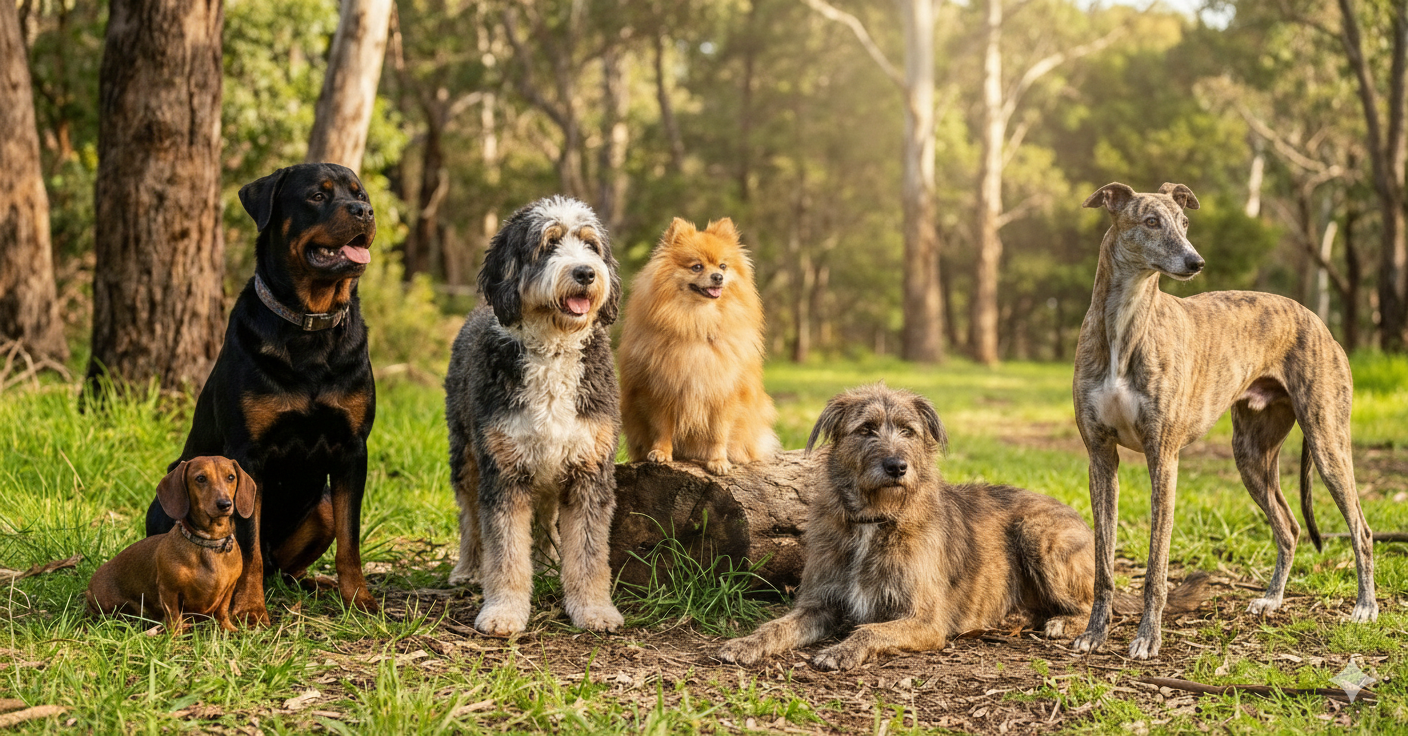
Respecting the Dog You Have: Why Breed, Development, and Communication Matter
It All Begins Here
One of the most loving things we can do for our dogs is also one of the hardest: truly seeing them for who they are, not who we expected them to be.
In a world full of viral training videos, breed stereotypes, and "perfect dog" expectations, it's easy to forget a basic truth—dogs are not interchangeable. Raising a pit bull or a rottweiler is not the same experience as raising a border collie, which is very different from living with a miniature poodle mix. Each dog brings a unique combination of genetics, development, temperament, and communication style into our homes. When we ignore those differences, frustration grows on both ends of the leash. When we honor them, everything changes.
Respecting the dog you have doesn't mean lowering standards or giving up structure. It means understanding what your dog was built to do, how they mature, how they communicate discomfort or fear, and how we—as humans—can shape the environment to support safer, calmer, more cooperative behavior.
Breed Is Not Destiny—but It Is Information
Breed is not a guarantee of behavior, but it is a blueprint.
Different breeds were developed for different jobs: guarding, herding, retrieving, companionship, problem-solving, or independent decision-making. Those roles shaped not only physical traits like size and strength, but also emotional thresholds, arousal patterns, persistence, and sensitivity.
Power breeds (such as pit bulls and Rottweilers) tend to mature more slowly, develop substantial physical strength, and often experience emotions in a big, embodied way. Their presence alone can change how the world responds to them.
Herding breeds (like border collies) are often highly sensitive to movement, sound, and environmental changes. They may mature mentally early but struggle with overstimulation.
Companion or toy breeds (such as miniature poodle mixes) are frequently bred for proximity to humans, emotional attunement, and adaptability—but that doesn't mean they're low-maintenance or universally easygoing.
None of these traits are "good" or "bad." They are neutral information. Problems arise when expectations don't match the dog standing in front of us.
Maturity Happens on Different Timelines
One of the most common sources of misunderstanding between humans and dogs is developmental timing.
Large and working breeds often take longer to reach emotional and neurological maturity—sometimes not until 3 or even 4 years old. That leggy, impulsive two-year-old Rottweiler may still be very much a canine adolescent, even if their body says "adult."
Smaller dogs often mature earlier, but that doesn't mean they skip learning stages or emotional growth. It simply means the timeline is compressed.
When we expect adult-level impulse control from a dog who is still developmentally young, we often label normal behavior as "stubborn," "dominant," or "bad." In reality, the dog may simply be under-supported for where they are in life.
Respect means adjusting expectations to match development—not rushing the process.
Dogs Are Always Communicating (We Just Miss the Early Signs)
Dogs communicate constantly, primarily through body language—not words, not obedience cues, and not punishment-avoidance. The earlier we learn to read their signals, the safer and calmer life becomes for everyone.
Most bites and reactive incidents do not come "out of nowhere." They are preceded by subtle signals that went unnoticed or were misunderstood.
Common signs of discomfort or stress include:
Turning the head away or avoiding eye contact
Lip licking or yawning when not tired
Freezing or suddenly becoming still
Ears pinned back or rotating sharply
Stiff posture or closed mouth
Slow, deliberate movement away
More overt signs, like growling, barking, and snapping, are often last-ditch communication attempts, not acts of aggression.
When dogs learn that their quieter signals are ignored, they may escalate, not because they want conflict, but because they're trying to be heard.
Respecting your dog means listening early.
Different Dogs, Different Thresholds
Not all dogs experience the world at the same intensity.
Some dogs have lower tolerance for physical handling, higher sensitivity to noise or movement, stronger reactions to unfamiliar dogs or people, or greater need for space or predictability. Others may be socially flexible, resilient, or eager to engage—but even those dogs have limits.
Breed tendencies can influence these thresholds, but individual experience, learning history, and environment matter just as much. A well-socialized dog can still have a bad day. A confident dog can still feel overwhelmed.
When we treat thresholds as moral failures instead of biological or emotional limits, we miss the opportunity to support our dogs before problems arise.
Environment Is a Training Tool
Understanding your dog allows you to shape the environment in ways that reduce conflict instead of constantly correcting behavior.
This might look like creating quiet retreat spaces for dogs who need decompression, managing greetings rather than forcing social interactions, using leashes, gates, and distance proactively, structuring routines that support predictability, or adjusting exercise and enrichment to match the dog's temperament.
A border collie may need mental outlets and calm pattern games more than endless physical exercise. A power breed may need slower introductions, clearer boundaries, and more time to emotionally regulate. A small companion dog may need protection from overwhelming interactions, not encouragement to "tough it out."
Environmental adaptation is not indulgence—it's intelligent training.
Respect Does Not Mean Lack of Structure
There is a common fear that understanding and accommodating dogs means letting them "run the household." In reality, the opposite is true.
Dogs thrive when expectations are clear, boundaries are predictable, consequences are fair and humane, and communication is consistent. Structure provides safety. Understanding ensures that the structure is appropriate.
When expectations align with the dog's capacity, learning accelerates. When expectations exceed capacity, stress increases—and stress erodes behavior.
Respectful training doesn't abandon rules; it builds them on a foundation of empathy and knowledge.
Fewer Incidents, Safer Communities
When humans understand dogs better, everyone benefits.
Dogs are less likely to feel trapped or threatened. Early signals are noticed and honored. Reactivity decreases when triggers are managed rather than ignored. Bite risk drops because dogs are not pushed past their limits.
Most dogs don't want conflict. They want clarity, safety, and agency within a human world that often feels confusing.
By learning how dogs communicate and how different dogs experience the world, we reduce fear on both sides of the leash.
Becoming Better Human Companions
Respecting the dog you have is an ongoing practice, not a one-time lesson.
It asks us to let go of comparison, replace control with curiosity, see behavior as information rather than defiance, and adjust ourselves as much as we ask dogs to adjust.
When we truly observe our dogs--how they move, how they pause, how they respond—we stop trying to force them into a generic mold. Instead, we build partnerships rooted in trust.
This shift, from control to curiosity, is often the turning point toward calmer homes, safer walks, stronger bonds, and dogs who can life fully as themselves within our human world.
And in the end, that bond is what training is really about.
This article reflects my work supporting dog owners in York, Adams, and Franklin Counties, PA, and Frederick and Carroll Counties, MD—helping families better understand behavior, communication, and the individual dog in front of them.