Why Is My Dog Suddenly Scared of Everything? Understanding Fear Phases & Rebuilding Confidence
It All Begins Here
There's a moment that catches many dog owners completely off guard.
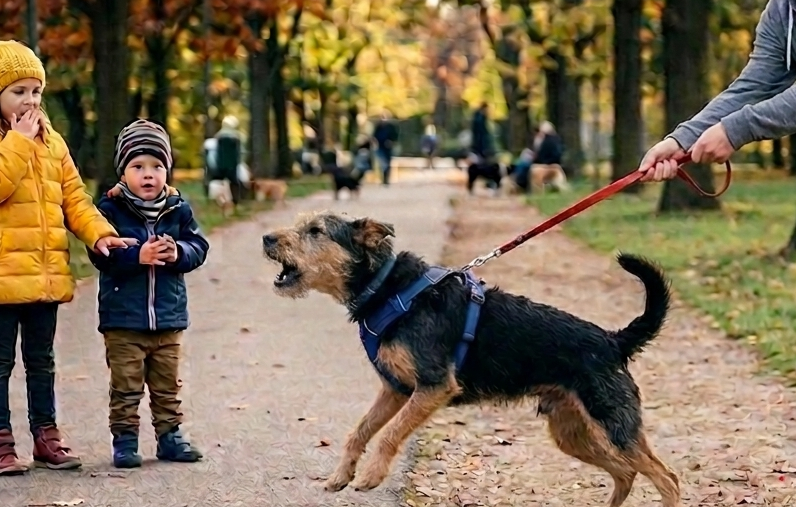
Your dog—easygoing, social, seemingly unbothered by the world—suddenly begins to hesitate. They pause on walks. They bark at people they used to greet happily. They hang back, watching, uncertain.
And the question arrives fast: What happened?
Closely followed by another: Did I do something wrong?
Let's start here, because it matters more than anything else: You did not cause this.
What you're seeing is often part of a completely normal developmental process — one that many dogs move through as they grow. You didn't cause it, but you absolutely can shape what comes next.
What Is a Fear Phase in Dogs?
A fear phase is a developmental window during which your dog becomes more aware of their environment — and more cautious about it.
It's not regression. It's not disobedience. It's not your dog "becoming difficult."
It's your dog beginning to ask a deeper question: Is this safe?
Most dogs go through at least two of these stages: one in early puppyhood (around 8–11 weeks) and another during adolescence (roughly 6–14 months). Many dogs, especially larger or more sensitive breeds — experience a third shift as they approach social maturity around 2–3 years old.
During these periods, things that once felt neutral can suddenly feel uncertain. A neighbor stepping outside. A sound in the distance. A familiar street that now looks different. Your dog isn't forgetting what they've learned. They're re-evaluating the world.
From Curiosity to Discernment: Why This Is Actually Normal
Puppies move through life with remarkable openness — everything is new, everything is worth investigating. But as dogs mature, something important shifts. They begin to sort their experiences. They notice patterns. They start to decide what deserves their attention — and their caution.
For dogs with protective or sensitive tendencies, this often shows up as hesitation around unfamiliar people, increased alertness on walks, or choosing to observe from a distance rather than approach.
While it can feel alarming, this shift is frequently the beginning of something meaningful: discernment. Your dog is learning to read the world — and that's not a problem to fix. It's a capacity to guide.
Is This Fear or Aggression? What Your Dog Is Actually Saying
This distinction matters enormously.
When a dog backs away, barks, or puts distance between themselves and something unfamiliar, they are not necessarily being aggressive. More often, they're communicating: I'm not comfortable. Please give me space.
This is called distance-increasing behavior — and in a healthy dog, it's actually a sign that they're trying to regulate their own experience before things escalate.
Your job isn't to shut this down. Your job is to listen, and then guide them through it.
Where Things Can Go Off Track
Fear phases themselves aren't the problem. What happens during them can be.
Many well-meaning owners respond by encouraging their dog to "say hi," allowing strangers to reach out a hand, or increasing exposure in hopes of speeding things along. The intention is good, but the message the dog often receives is: You have to handle this, even if you're not ready.
That's when normal developmental fear can harden into lasting reactivity. Not because the dog is difficult, but because the dog felt unsupported at a vulnerable time.
What a Suddenly Fearful Dog Actually Needs
During a fear phase, more pressure isn't the answer. Neither is more correction, or more forced exposure.
What your dog needs is:
Space. Predictability. Clarity. And you — not as someone pushing them forward, but as someone walking with them through it.
Here's what that looks like in practice.
6 Ways to Help a Fearful Dog Rebuild Confidence
1. Remove the social pressure. Stop expecting your dog to greet people. They don't need to say hello, accept petting, or charm strangers. They only need to learn: People can exist near me, and I am safe. That single shift often reduces a significant amount of anxiety on its own.
2. Use distance as a training tool. Distance isn't avoidance; it's strategy. When your dog has enough space to notice something, stay calm, and recover quickly, they're learning. When they're too close and overwhelmed, learning stops. If your dog is reacting, the first question to ask is: What would this look like from farther away? That's where progress begins.
3. Reward calm observation. When your dog notices something and stays relaxed — even for just a moment — acknowledge it. A soft good. A small treat. A calm presence beside them. You're building an association: I noticed that, and I'm okay. Over time, this changes how your dog feels, not just how they behave.
4. Let your dog have a choice. Confidence grows when dogs have agency. Allow your dog to approach if they want, stay back if they prefer, or move away without correction. Dogs who feel they have a choice stop feeling trapped — and dogs who don't feel trapped don't feel the need to defend themselves.
5. Practice "watching the world" together. Some of the most effective work doesn't look like training at all. Sit somewhere quiet with your dog — a park bench, the open hatch of your car, a calm stretch of sidewalk — and simply observe. No interaction required, no pressure applied. Just being present while the world moves around you. This teaches your dog: The world flows around me, and I am safe within it.
6. Keep outings short and successful. A fifteen-minute outing that ends on a good note is worth far more than an hour-long one that tips into overwhelm. Watch for relaxed body language, curiosity instead of tension, the ability to disengage. End while your dog is still feeling good. That's how confidence accumulates.
What Progress Actually Looks Like
Progress during a fear phase is rarely dramatic. It usually doesn't look like your dog suddenly loving everyone again.
Instead, it looks like: quicker recovery after being startled. Less intensity in reactions. More curiosity, less avoidance. Choosing to stay and observe rather than retreat.
These are quiet changes, but they're powerful ones. They tell you your dog is learning: I can handle this.
Redefining the Goal
Many people hope their dog will grow into one who loves everyone. But that's not the only measure of success, or even the healthiest one.
A truly stable dog is one who can move through the world without distress, exist calmly around people they don't know, and trust their person to guide them through uncertain moments.
Calm, not necessarily social. Secure, not performative.
A Reassuring Truth
Some of the most grounded, steady adult dogs you'll ever meet went through a fear phase. Not because they were pushed through it, but because they were supported through it.
They learned that they didn't have to manage the world alone. That their person would help create safety. That they could take their time.
And from that, something lasting grows: confidence rooted in trust.
You Don't Have to Figure This Out Alone
If your dog is going through a sudden fear phase, it can feel disorienting, especially when the dog who once seemed so easy is now hesitating at every corner.
You may wonder if you're doing enough, doing the right things, or whether this will pass.
With the right support, it can. And you don't have to find your way there by trial and error.
At Smart Paws Academy, we help dogs and the people who love them move through these stages with clarity and confidence — not by pushing harder, but by understanding what your dog is actually communicating, and building from there.
Your dog doesn't need to be fixed. They need to be understood.
Want a Simple Plan to Get Started?
If your dog is going through a fear phase, you don’t have to figure it out on your own. I’ve created a free Fear Phase Guide to help you take the first steps with clarity and confidence.
👉 Download your free guide here:
Or, if you’d like more personalized support:
👉 Schedule a free phone consultation: https://www.smartpaws-academy.com/appointments
Calm isn't a personality trait. It's something we build — together.